A Second Charge, From the Files
Three weeks after raiding two sex businesses near Dōgo Onsen, police in Matsuyama have come back with a different charge — one built from the paperwork they carried out of the shops.
On Wednesday, September 30, 2026, the Matsuyama-Higashi police station in Ehime Prefecture re-arrested the operators of a soapland and a "health" shop, both in the Dōgo-Takōmachi district, on suspicion of violating the Anti-Prostitution Act — the baishun bōshi-hō. Police also arrested the soapland's manager for the first time, according to TV Ehime (EBC) and the Ehime Shimbun.
Those held are:
| Soapland case | "Health" shop case | |
|---|---|---|
| Suspect | Operator, 68 (re-arrest); manager, 47 (new arrest) | Operator, 48 (re-arrest) |
| Residence as reported | Minami-doi-machi, Matsuyama; Dōgo-Imaichi, Matsuyama | Kami-ichi, Matsuyama |
| Alleged date | May 22, 2026 | July 27, 2026 |
| Woman described | A woman in her 20s from Ehime | A woman in her 20s from Ehime |
| Plea | Not disclosed | Not disclosed |
None of the suspects were named in the reporting reviewed here.
The Allegation: A Deal to Share the Money
The new charge is not about the rooms. It is about the arrangement with the women.
Police allege that on May 22, the soapland's operator and manager, acting together, entered into an agreement inside the shop with a female employee under which she would have intercourse with an unspecified number of customers and the payment would be divided between them, TV Ehime reported. The health-shop operator is accused of making the same kind of agreement with a female employee on July 27. The Ehime Shimbun reported that both women were in their 20s and lived in the prefecture.
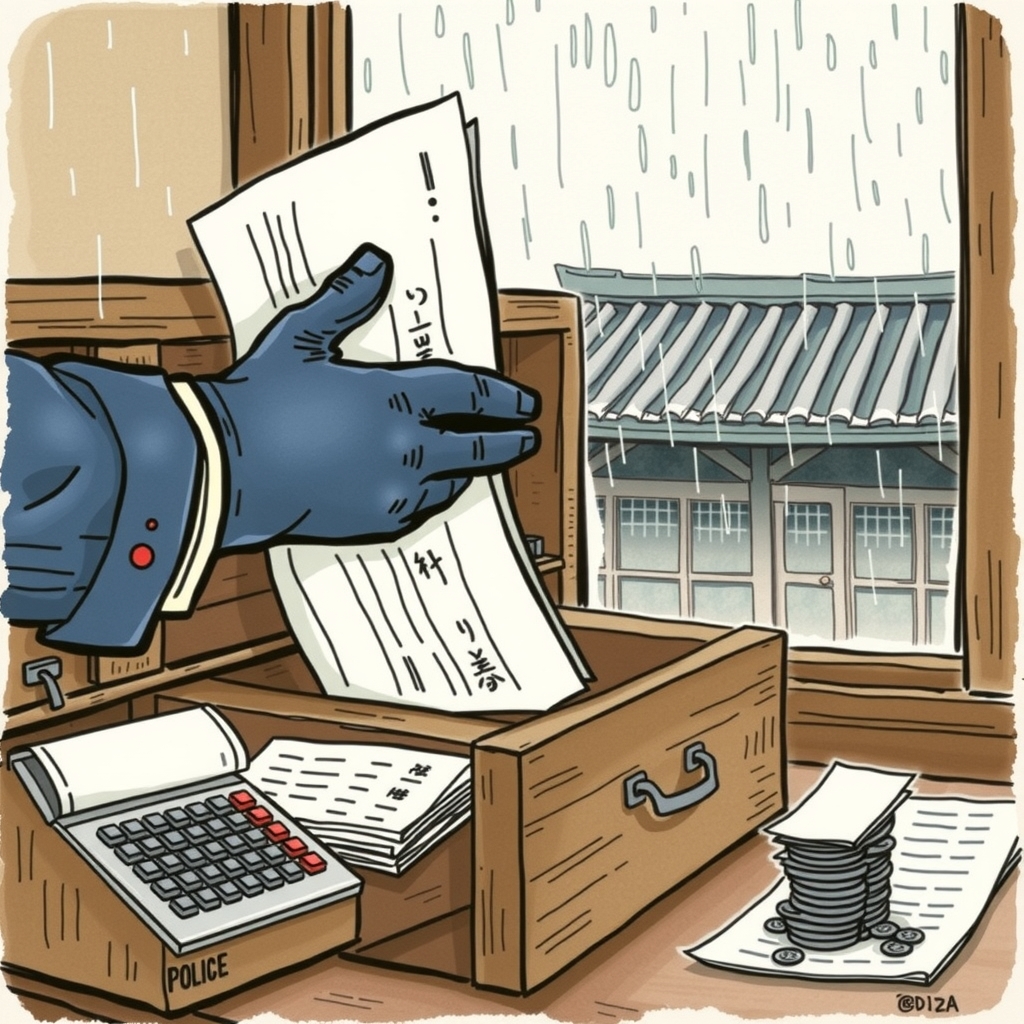
Police said they found documents relating to the contracts while searching the premises after the first arrests, and used them to build the new case, according to TV Ehime. Whether the suspects admit the allegations has not been disclosed.
How the Case Got Here
The two shops were first hit in early September. On September 8, officers arrested the health-shop operator and five male employees in the act; the next day they arrested the soapland's operator. Both arrests were for running a business that knowingly provided private rooms for prostitution — the place-provision offense this site covered at the time.
Police have said the operation is part of a stepped-up effort to "clean up" the city's entertainment district, and TV Ehime repeated that framing on Wednesday.
Why the Contract Charge Matters
Japan's 1956 Anti-Prostitution Act does not punish the woman who sells sex or the man who buys it. It punishes the people who organize it, and it does so clause by clause.
The September arrests used Article 11, which covers providing a place for prostitution. The new charge falls under the act's contract provision, Article 10, which makes it a crime to enter into an agreement whose terms are that another person will engage in prostitution. It carries up to three years in prison or a fine of up to 100,000 yen.
The difference is more than technical. A place-provision case says the shop supplied the room. A contract case says the shop set terms with the woman and took a share of what customers paid her — closer to the core of what the law treats as exploitation. Seized documents are the kind of evidence that makes such a charge provable.
For licensed operators the stakes extend past the sentence. Soaplands and health shops operate under the fūei-hō — the Businesses Affecting Public Morals Regulation Act — which allows authorities to revoke a business's permission or notification status after a conviction like this one.
Under Japanese procedure, police can hold suspects again on a new allegation, and prosecutors will decide separately whether to indict on each charge. An arrest is not a finding of guilt.
The Wider Picture
Matsuyama's cases sit inside a national wave of Anti-Prostitution Act enforcement against soaplands and other licensed shops that has run through 2026, from Tokyo to Sendai, Kobe and Niigata. At the same time, a Justice Ministry panel has recommended the first major overhaul of the 1956 law, including penalties for buyers who solicit and higher fine ceilings, with a bill under consideration for the autumn Diet session.
The fines the Matsuyama operators face are still set at their 1956 levels.
Sources: TV Ehime (EBC), September 30, 2026, 3:14 p.m., updated 6:53 p.m. (via Yahoo! News Japan and FNN Prime Online), for the ages and neighborhoods of the three men, the May 22 and July 27 allegations, the agreement to divide payments, the seized contract documents, the undisclosed pleas and the police statement on the entertainment district. Ehime Shimbun ONLINE, September 30, 2026, in two separate items, for the Matsuyama-Higashi station, the re-arrests and new arrest, and the description of each woman as in her 20s and from Ehime. Penalties are from Articles 10 and 11 of the Anti-Prostitution Act. The September 8–9 arrests are drawn from this site's September 11 article. No one is named here, consistent with the source reporting.