What the Hotel Staff Found
The case started with lost property.
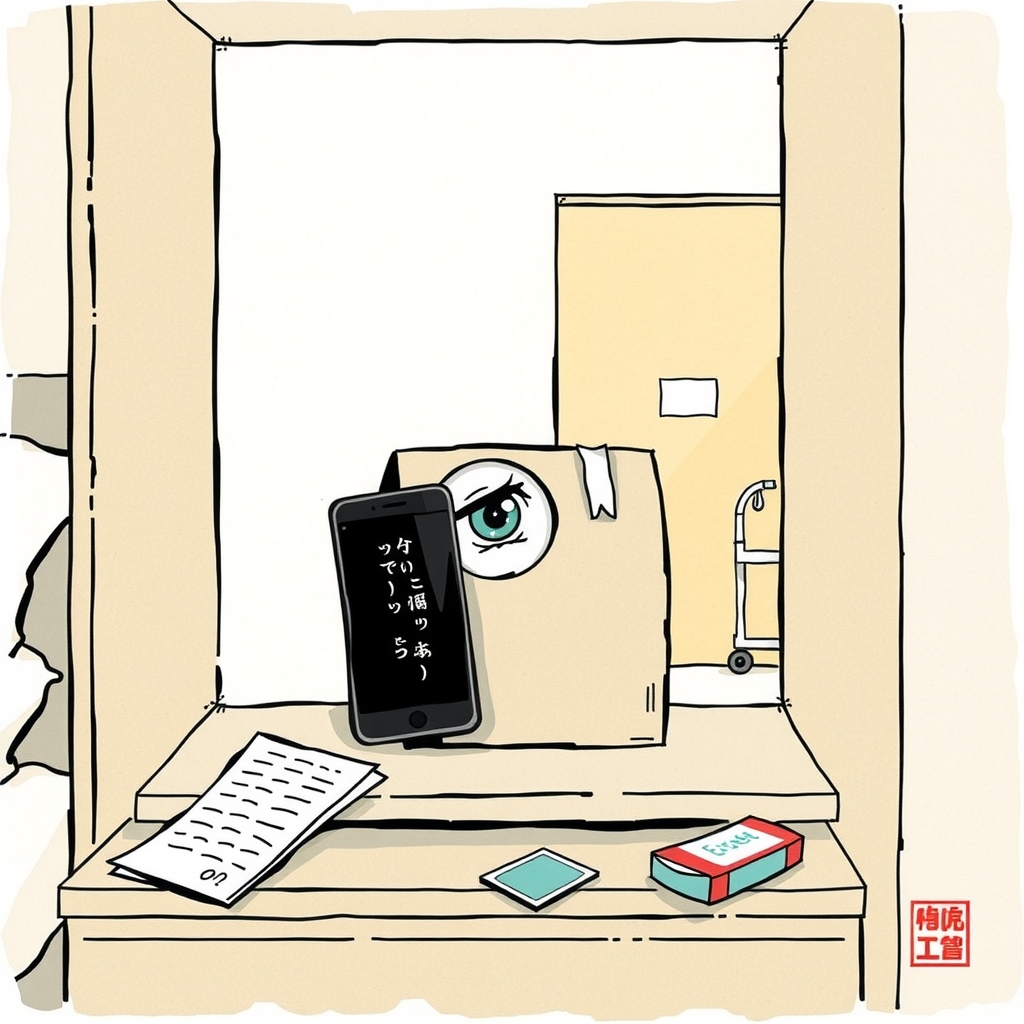
Staff at a lodging facility in Kumamoto's Chuo Ward found a smartphone left behind in a room and contacted police. According to RKK Kumamoto Broadcasting, everything on the phone except the lens had been covered in paper. Kumamoto Asahi Broadcasting (KAB) reported that it sat inside a box-like object with a hole cut out for the camera. It had been placed on a shelf. When investigators checked what was on it, TV Kumamoto (TKU) reported, they found footage of a woman.
On Thursday, October 1, 2026, the Kumamoto Chuo Police Station arrested the phone's owner, a 49-year-old teacher at the high school affiliated with Kumamoto Gakuen University, a private school in the city's Chuo Ward. NHK and the Kumamoto Nichinichi Shimbun described him as a teacher. RKK and Kumamoto Kenmin Television (KKT) called him a school employee.
The Allegation
Police allege that at about 1:45 p.m. on September 9, at the lodging facility, he set a smartphone to record in the room and filmed the body of a woman in her thirties who works at a sex-industry business, without her consent. Several outlets described her as someone he knew. RKK reported that the footage showed her unclothed.
He was arrested on two counts: seiteki shitai-tō satsuei, or sexual imagery recording, under the national law that criminalizes covert sexual filming, and tōsatsu, or voyeurism, under the Kumamoto Prefecture nuisance-prevention ordinance.
Police say he has admitted the allegations. Kumamoto Nichinichi, TKU, KAB, RKK and KKT all carried the same account of his statement: he told investigators he filmed her "to satisfy my sexual desires." KKT reported that police are looking into whether there are other cases.
The woman's employer has not been named. Neither has the type of business she works for, or whether she was working at the time.
Why the Charge Exists
Until three years ago, a case like this one could fall through Japan's criminal law.
Covert filming was handled mainly by prefectural nuisance ordinances. Those were written with public places in mind, such as train platforms, escalators and changing rooms, and they differed from one prefecture to the next. A hotel room that a woman entered by agreement, for work, was an uncertain fit.
The Act on Punishment of Acts Related to Photographing Sexual Body Parts, etc., in force since July 13, 2023, set a single national offense. It covers secretly filming a person's sexual body parts or sexual acts no matter where it happens, including private rooms. The maximum penalty is three years' confinement or a fine of up to ¥3 million. The Kumamoto case is charged under that law and under the prefectural ordinance together.
For women who work in Japan's fūzoku businesses, the change matters in a practical way. Delivery-health and similar services, licensed under the fūei-hō (the Businesses Affecting Public Morals Regulation Act), take place mostly in hotel rooms and private homes, which the older ordinances covered poorly. A worker alone in a room with a customer often has no way of knowing whether she is being recorded.
The Second Case in Five Weeks
Kumamoto is the second case in about five weeks to put a schoolteacher on the other side of that statute.
On August 31, Osaka police referred the 59-year-old principal of an Osaka municipal elementary school to prosecutors. They alleged that on August 11 he used a miniature camera shaped like a car key to film a female worker while receiving sexual services at a hotel. On September 30, Yomiuri Television reported that the Osaka City Board of Education had dismissed him.
The two cases have one thing in common. Neither came to light because the woman being filmed noticed the camera. In Osaka, the key-shaped device was the evidence. In Kumamoto, the evidence was a phone that its owner left behind, and the case was found by a stranger cleaning a room.
What Happens Next
Under Japanese criminal procedure, police can hold the suspect for up to 48 hours before sending the case to prosecutors. Prosecutors can then ask a court for up to 20 more days of detention before deciding whether to indict.
The suspect has not been charged, and he is presumed innocent.
Sources: NHK, "Kumamoto Gakuen University affiliated high school teacher arrested on suspicion of secretly filming an acquaintance with a mobile phone," October 1, 2026; Kumamoto Nichinichi Shimbun, October 1, 2026, for the Kumamoto Chuo Police Station arrest, the charges under the sexual-imagery-recording law and the Kumamoto Prefecture nuisance-prevention ordinance, the time of 1:45 p.m. on September 9 and the suspect's statement; RKK Kumamoto Broadcasting, October 1, 2026, for the phone covered in paper except for the lens and the hotel staff's report to police; KAB Kumamoto Asahi Broadcasting, October 1, 2026, for the box-like object with the camera area cut out; TV Kumamoto (TKU), October 1, 2026, for the phone set to record on a shelf and the police check of its contents; Kumamoto Kenmin Television (KKT), October 1, 2026, for the investigation into possible further cases. The Osaka case is drawn from MBS News, Yomiuri Television and Kansai Television reporting of August 31, 2026, and Yomiuri Television's report of September 30, 2026 on the dismissal. Statutory provisions are from the Act on Punishment of Acts Related to Photographing Sexual Body Parts, etc. (in force July 13, 2023). Glossary: fūei-hō = the Businesses Affecting Public Morals Regulation Act, which licenses and polices nightlife and adult-entertainment businesses; satsuei-zai = the offense of sexual imagery recording under the 2023 law. This publication has chosen not to name the suspect.