A Minute on the Sidewalk
The pitch lasted a minute or two. The arrest took four weeks.
On September 24, the Sapporo Central Police Station arrested a 44-year-old man from the city's Chuo Ward, who described himself as unemployed. Police accuse him of violating the Hokkaido Nuisance Prevention Ordinance by touting, according to reports by HBC (Hokkaido Broadcasting) and STV (Sapporo Television).
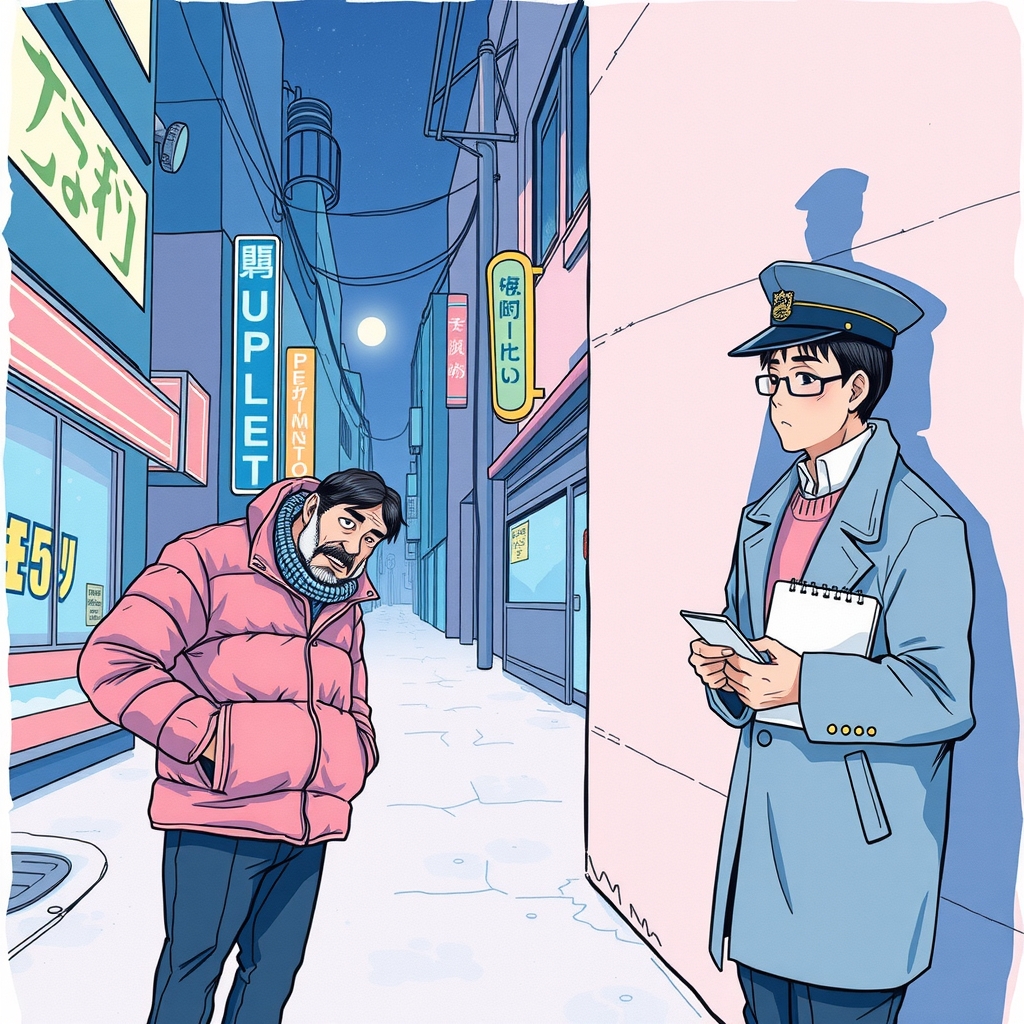
Police say the man approached a man in street clothes on the sidewalk at Minami 5-jo Nishi 4-chome in Susukino, Sapporo's main nightlife district and one of the largest in Japan. It happened at about midnight between August 27 and 28. HBC put the time just after 11:30 p.m. on the 27th, and STV put it at about midnight on the 28th. The man he approached was a police officer working touting enforcement.
According to the reports, the man walked alongside the officer and kept pitching him. "How about using our guide service?" he asked. "Where were you just now?" "Is there anywhere you want to go?" Neither station reported which business, if any, he was steering customers toward.
Questioned by police, the man said, "I don't remember," according to STV. HBC also reported that he denies the allegation. Police are investigating whether he had accomplices or committed other offenses, and HBC said they are also trying to identify any shop connected to the pitch.
The Second Such Arrest This Month
It is the second arrest of its kind in Susukino reported this month.
On September 2, UHB (Hokkaido Cultural Broadcasting) reported the arrest of another man from Chuo Ward. He was also listed as 44 and unemployed, and was accused under the same ordinance of touting a plainclothes officer in Susukino at about 1 a.m. on June 18. UHB said that officer belonged to the Susukino Special Investigation Unit, the Hokkaido police squad assigned to the district. According to UHB's headline, the pitch that time was for a girls bar: "a cheap one-set deal where you can stay long." That man told police, "I have absolutely no memory of this."
The reports do not say whether the two arrests involve the same person, and this article does not suggest that they do.
The timing is similar in both cases. The alleged pitch comes first and the arrest follows weeks or months later. The ordinance requires evidence of persistence, meaning following, blocking or holding onto the person. A single "Looking for a place?" is not enough. By making the officer the target, police become both the witness and the complainant.
Two Ordinances, Two Kinds of Penalty
Touts in Susukino fall under two separate rulebooks.
The first is the City of Sapporo's anti-touting ordinance, which took full effect on July 1, 2022. It bans touting and loitering to tout on public streets across a zone covering most of central Sapporo, including Susukino. Businesses are also barred from accepting customers or workers obtained through street solicitation. Violations are handled administratively. The city can issue warnings and orders, impose a karyō (non-criminal fine) of up to ¥50,000 and publish violators' names. According to the city's website, as of July 2026 it had published the names of two people.
The second is the one used this week, the prefecture-wide Hokkaido Nuisance Prevention Ordinance. It is criminal law. Article 9 bars persistent touting in public places, including touting for businesses regulated under the fūei-hō (the Businesses Affecting Public Morals Regulation Act) and touting done by grabbing, blocking or following someone. Under Article 11, violators face up to six months' imprisonment or a ¥500,000 fine. Repeat offenders face up to one year or ¥1 million.
The gap in penalties explains why police rely on plainclothes officers. The city ordinance works with a warning or a fine. An arrest requires a criminal case, and the most reliable witness to a persistent pitch is an officer who has been pitched.
A National Pattern
The Sapporo case follows a string of similar arrests across the country. In late August, police in Iwaki, Fukushima Prefecture, and in Oita arrested touts who had approached officers on patrol or in plain clothes. The ordinance wording differs from prefecture to prefecture, but the method is the same. Police put an officer in the tout's path, record what is said and make the arrest later.
The man arrested on September 24 has not been charged. Under Japanese procedure, prosecutors will decide whether to indict him, seek a summary fine or drop the case.
Sources: HBC Hokkaido Broadcasting, September 25, 2026, and STV Sapporo Television, September 25, 2026 (both via Yahoo! News Japan), for the September 24 arrest, the location, the time of the alleged pitch, the quoted remarks and the suspect's denial. The two stations give slightly different times for the incident, and both are noted above. UHB Hokkaido Cultural Broadcasting, September 2, 2026, for the separate June 18 case and the Susukino Special Investigation Unit. City of Sapporo website for the 2022 anti-touting ordinance, its ¥50,000 administrative fine and the number of published violators. Text of the Hokkaido Nuisance Prevention Ordinance (Hokkaido Prefectural Police) for Articles 9 and 11. Glossary: kyakuhiki = street touting; karyō = a non-criminal administrative fine; fūei-hō = Businesses Affecting Public Morals Regulation Act. An arrest is not a finding of guilt. Consistent with the Japanese reports, no one is named here.