The Last Five Walk
Chiba prosecutors have closed the book on the Funabashi arm of the "God's Esthe" network, and the final tally is short.
On September 24, the Chiba District Public Prosecutors Office declined to prosecute five of the seven people arrested in June over a "men's esthetic" salon that police say sold sexual services from an apartment in Funabashi, a commuter city just east of Tokyo. The five were employees and other staff, according to TBS NEWS DIG (JNN). Prosecutors gave their standard explanation: they had "taken into account all circumstances of the case." They did not elaborate.
The other two had already been dealt with. On August 5, prosecutors filed summary indictments against the shop's operator, a 43-year-old company executive with no fixed address, and a 40-year-old male employee who lives in Funabashi, according to the Chiba Nippo. A summary court ordered them to pay fines of 1 million yen and 500,000 yen, respectively, that same day.
That is the whole result: two fines and no trial. Police had put the monthly card receipts of a single room at about 10 million yen.
What Police Alleged in July
The case was one of the more ambitious prohibited-zone busts of the year. On July 1, Chiba Prefectural Police announced the arrest of seven people on suspicion of violating the fūei-hō, the Businesses Affecting Public Morals Regulation Act. The law requires sex businesses to register with prefectural authorities, and it lets prefectures bar them from entire districts. The Honcho area of Funabashi is one of those districts.
According to July reports by TBS, Chiba TV and the Chiba Nippo, police alleged that the group ran the salon from an apartment unit there starting around March 2026. Its name was Kamigami no Esute, or "Gods' Esthe." Investigators estimated sales of at least 30 million yen over four months at that one location. They said they had identified about 25 affiliated rooms across Chiba Prefecture running under the same brand as a franchise.
The Chiba Nippo report on the summary orders names a second shop, "Kami SPA," as also operated in the banned zone.
The brand's lineage is what made the case notable. "Gods' Esthe" was a franchise of Kami no Esute, or "God's Esthe," which Kanagawa and Chiba police broke up in February. That chain had spread across Tokyo and four surrounding prefectures and reportedly took in more than 1 billion yen a year. In Chiba, it looked like the business had survived the loss of its name by changing a single character, from one god to many.
Two Fines Against a Tougher Law
The outcome in Funabashi sits awkwardly beside the direction of national policy.
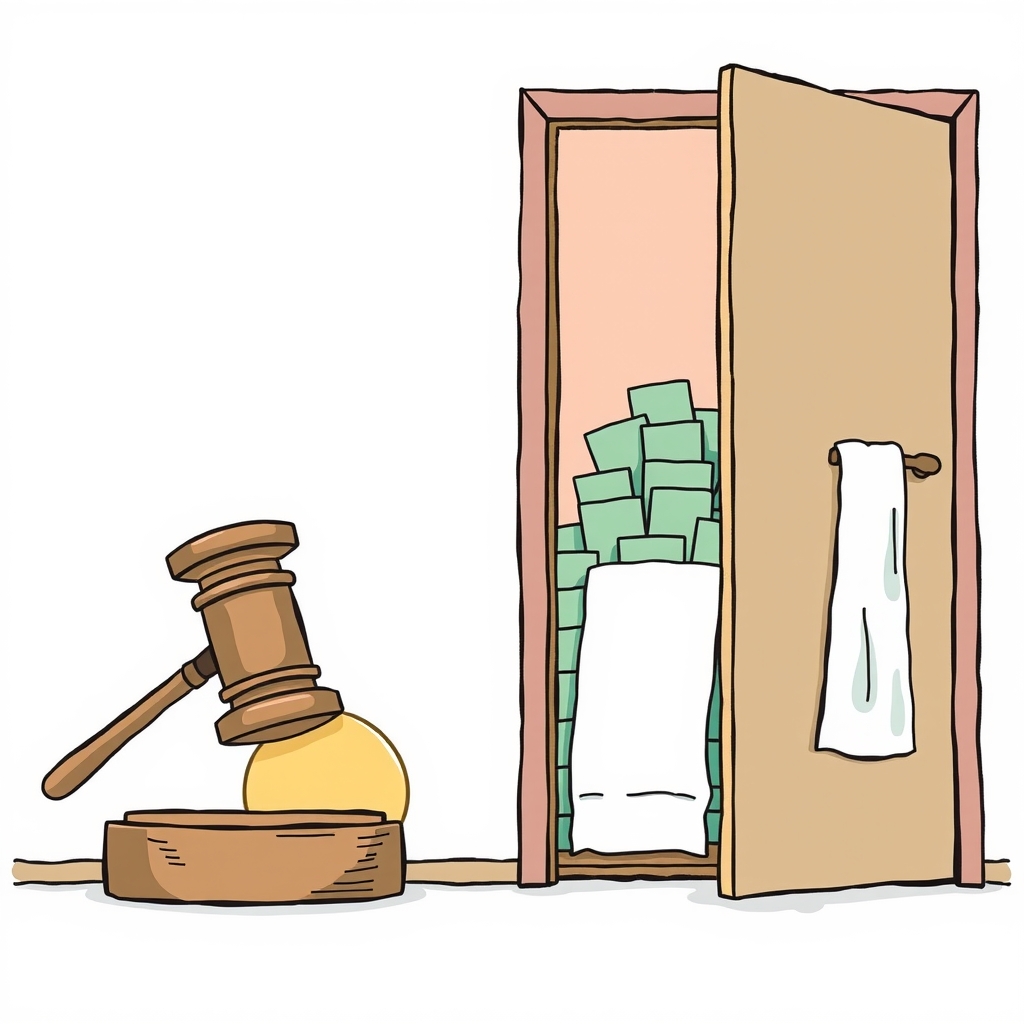
A summary order (ryakushiki meirei) is Japan's paper procedure for minor cases. Prosecutors ask a summary court for a fine, the defendant consents, and the case closes without a public hearing. It is available only when the fine sought is 1 million yen or less. The owner received the maximum a summary order allows.
The fūei-hō allows far more. An amendment that took effect in June 2025 raised the ceiling for unlicensed operation and related offenses, which lawyers who advise the industry say includes prohibited-zone operation. The maximum rose from two years' imprisonment and a 2 million yen fine to five years and 10 million yen. Companies now face fines of up to 300 million yen. Lawmakers sold the change as a response to the growth of illegal operators and the scout networks that supply them.
Summary fines are still common in these cases. In Numazu, Shizuoka Prefecture, prosecutors took the same route on September 18 against a Yokohama woman accused of running a men's salon that offered sexual services where such shops are banned. Shizuoka Asahi TV reported on September 24 that a summary court fined her 1 million yen. For a room that police say took in 10 million yen a month, the Funabashi fine is about three days' receipts.
Where the Network Stands
The Kanagawa side of the case has moved further. In September, the Yokohama District Court gave suspended sentences to two executives of the original God's Esthe, according to the Kanagawa Shimbun. Prosecutors there had asked for two years in prison.
Chiba police have not said publicly what became of the rest of the roughly 25 rooms they tied to the franchise.
Sources: TBS NEWS DIG (JNN), September 24, 2026 (via Yahoo! News Japan), for the September 24 non-prosecution of five of the seven people arrested and the prosecutors' stated reason. Chiba Nippo, August 6, 2026, for the August 5 summary indictments of the 43-year-old operator and the 40-year-old employee, the 1 million yen and 500,000 yen fines, and the shop names "Kamigami no Esute" and "Kami SPA." Reports by TBS, Chiba TV and the Chiba Nippo, July 1–2, 2026, for the arrests, the Honcho, Funabashi location, the estimated sales and the roughly 25 affiliated rooms. Kanagawa Shimbun, September 3, 2026, for the Yokohama sentencing. Shizuoka Asahi TV, September 24, 2026, for the Numazu summary order. Penalty figures under the June 2025 fūei-hō amendment are from Fukui Prefectural Police notices and published legal commentary. Glossary: fūei-hō = Businesses Affecting Public Morals Regulation Act; ryakushiki meirei = summary order, a fine imposed on paper without a public trial; "men's esthe" = a massage-salon category that is legal in itself but often used as cover for unregistered sex businesses. The non-prosecution of the five is not a finding of guilt or innocence. In line with this site's practice and the Japanese reports, no one in the case is named here.