The Shop Was Named for Desire
The Metropolitan Police Department announced on September 9, 2026 that it had arrested four men on suspicion of violating the Anti-Prostitution Act — the baishun bōshi-hō — by providing a place for prostitution in an apartment in Shinjuku Ward.
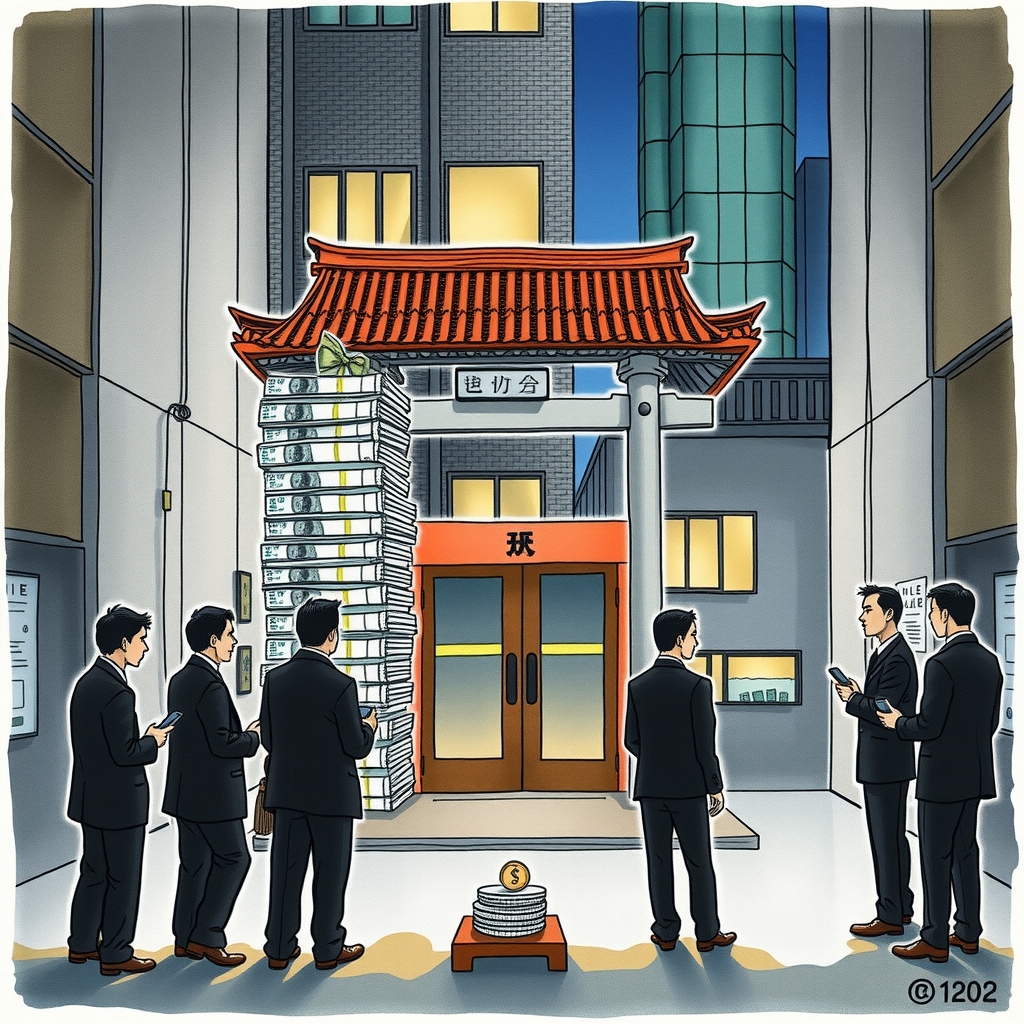
The shop was called Bonnō-ji, written 煩悩寺. Bonnō is the Buddhist term for worldly desire, the cravings a practitioner is supposed to extinguish; ji is temple. Its website, according to police, described it as a men's esthetic salon — a menzu esute, the massage-adjacent category that has become the fastest-growing and least regulated corner of Japanese nightlife.
Police say it was not a salon. They say the going rate was 10,000 yen for 15 minutes, advertised as a "training course," and that what the customer received was sex.
Those arrested, as named in the reporting:
- Ryota Kasahara, 26, the operator, of Nishi-Ochiai, Shinjuku Ward
- Koki Kamide, 21, an employee
- Kazuya Taniguchi, 29, an employee
- Shinji Yamamoto, 28, an employee
The arrest allegation is narrow and specific. Investigators with the MPD's public morals division say the four conspired on July 17, 2026 to set up a "play room" in an apartment in Okubo, Shinjuku Ward, and to provide it as a place where a woman working for the shop would have sex with a customer for money. Police have not disclosed how the four responded to the allegation. None has been convicted of anything.
The number that carried the story onto five national outlets was the revenue. Police estimate the operation took in roughly 80 million yen since around March 2026, a figure that includes a predecessor business.
Fifteen Minutes, Ten Thousand Yen
The price is the part of this case that explains the rest of it.
A conventional men's esthetic course in Tokyo runs 20,000 to 30,000 yen, according to coki, a business outlet that covered the raid. Bonnō-ji's advertised base rate was a third of that, in a quarter of the time. In the men's esthe market, a "training course" ordinarily signals a discounted session with a therapist still in probation — an entry-level slot, priced to fill a schedule.
Run the arithmetic the police estimate implies and the model becomes legible. Eighty million yen at a 10,000-yen base rate is on the order of 8,000 sessions in roughly six months, before any upsell. That is not a spa. It is a throughput business, and the fifteen-minute unit is the machinery that makes the throughput possible.
Customers were brought in, police say, through chat messages on social media that pushed traffic to the shop's homepage — a funnel that keeps the storefront invisible from the street and the advertising outside the reach of the poster-and-signage rules that govern licensed venues.
The supply side is what the investigation has not finished with. Sankei Shimbun reported that women working at the shop had been referred to it by scouts, and the MPD said it is examining whether an illegal scouting operation fed the business. That thread connects this case to the enforcement campaign this site has tracked all summer: the July arrest of one of Kabukicho's best-known scouts, the August arrests of university students working scout routes, and the Tokyo police decision on September 5 to publish the actual LINE scripts scouts use.
| Detail | As reported |
|---|---|
| Announced | Sept. 9, 2026, Metropolitan Police Department |
| Charge | Anti-Prostitution Act — providing a place for prostitution |
| Arrested | Ryota Kasahara, 26, operator; Koki Kamide, 21; Kazuya Taniguchi, 29; Shinji Yamamoto, 28 |
| Alleged act | Conspiring on July 17, 2026 to set up a "play room" in an Okubo apartment for a female employee to sell sex |
| Shop | "Bonnō-ji" (煩悩寺), advertised online as a men's esthetic salon |
| Advertised rate | 10,000 yen for 15 minutes, billed as a "training course" |
| Marketing | Social-media chat driving traffic to the shop's website |
| Estimated revenue | About 80 million yen since around March 2026, including a predecessor shop |
| Open line of inquiry | Whether illegal scouts referred the women to the shop |
| Suspects' responses | Not disclosed |
The Statute, and What It Is Worth
Japan's Anti-Prostitution Act does not punish the woman who sells sex, and it does not punish the man who buys. Article 3 declares that no person may engage in prostitution or be its customer, and attaches no penalty to either. The criminal weight of the law falls entirely on third parties — the solicitor, the procurer, the contractor, the manager, and the person who supplies the room.
That last one is Article 11, the provision cited here:
- Paragraph 1 — knowingly providing a place for prostitution: up to three years' imprisonment or a fine of up to 100,000 yen.
- Paragraph 2 — making a business of providing such places: up to seven years' imprisonment and a fine of up to 300,000 yen.
Police announced the arrests as place-provision without specifying which paragraph prosecutors will pursue. Either way, the ceilings are worth stating next to the police estimate of the takings: 300,000 yen is 0.375 percent of 80 million. Those fine figures were written into the statute when it passed the Diet in 1956 and have never been raised. The prison terms are the real deterrent in Article 11; the monetary penalty, seventy years on, is a rounding error against the revenue it is meant to address.
This is the structural reason the men's esthe sector keeps producing cases like this one. A shop that registers as a tenpo-gata seifūzoku tokushu eigyō — a licensed premises-based adult business — takes on zoning restrictions, filing obligations and a police relationship. A shop that calls itself a massage salon takes on none of that, because the fūei-hō, the Businesses Affecting Public Morals Regulation Act, has no license category for it. The business only becomes criminal at the moment sex is proved, which is why enforcement in this sector increasingly arrives as an Anti-Prostitution Act case rather than a licensing case, and why it requires the kind of evidence police built here: a specific room, a specific date, a specific transaction.
An industry figure quoted anonymously by coki described arrest as a cost already priced into the model — first offenders generally draw suspended sentences, and owners insulate themselves behind replaceable managers. That is one operator's cynicism, not a finding. But it is a claim the arithmetic above does nothing to refute.
What the record shows today is four arrests, one apartment, one date in July, and an estimate of 80 million yen. What it does not yet show is where that money went, or who sent the women.
Sources: Sankei Shimbun reporting of September 9, 2026 on the arrests, the charge, the Okubo apartment, the July 17 allegation, the 15-minute/10,000-yen rate, the roughly 80 million yen in sales since around March including a predecessor shop, and the scout referral of female employees; FNN Prime Online (Fuji Television) reporting of September 9 naming all four suspects with ages and roles; TV Asahi (ANN) reporting of September 9 on the social-media chat marketing, the men's esthetic salon cover and the MPD's stated intention to examine illegal scouting; Nippon Television (NNN) reporting of September 9 on the shop name and the "training course" pricing; ABEMA TIMES reporting of September 9; and coki reporting of September 9 on prevailing men's esthe pricing and industry reaction. The text and penalties of the Anti-Prostitution Act, Articles 3 and 11, are from the statute as enacted in 1956 and currently in force. An arrest is an allegation, not a finding of guilt; police did not disclose the suspects' responses, and no charge has been tested in court. Glossary: baishun bōshi-hō = the Anti-Prostitution Act, which penalizes third parties to prostitution rather than the seller or the buyer; fūei-hō = the Businesses Affecting Public Morals Regulation Act, which licenses and polices nightlife and adult-entertainment businesses; menzu esute = "men's esthetic," a massage-style service category with no licensing tier of its own; tenpo-gata seifūzoku tokushu eigyō = a licensed premises-based adult business.