The Name on the Paperwork
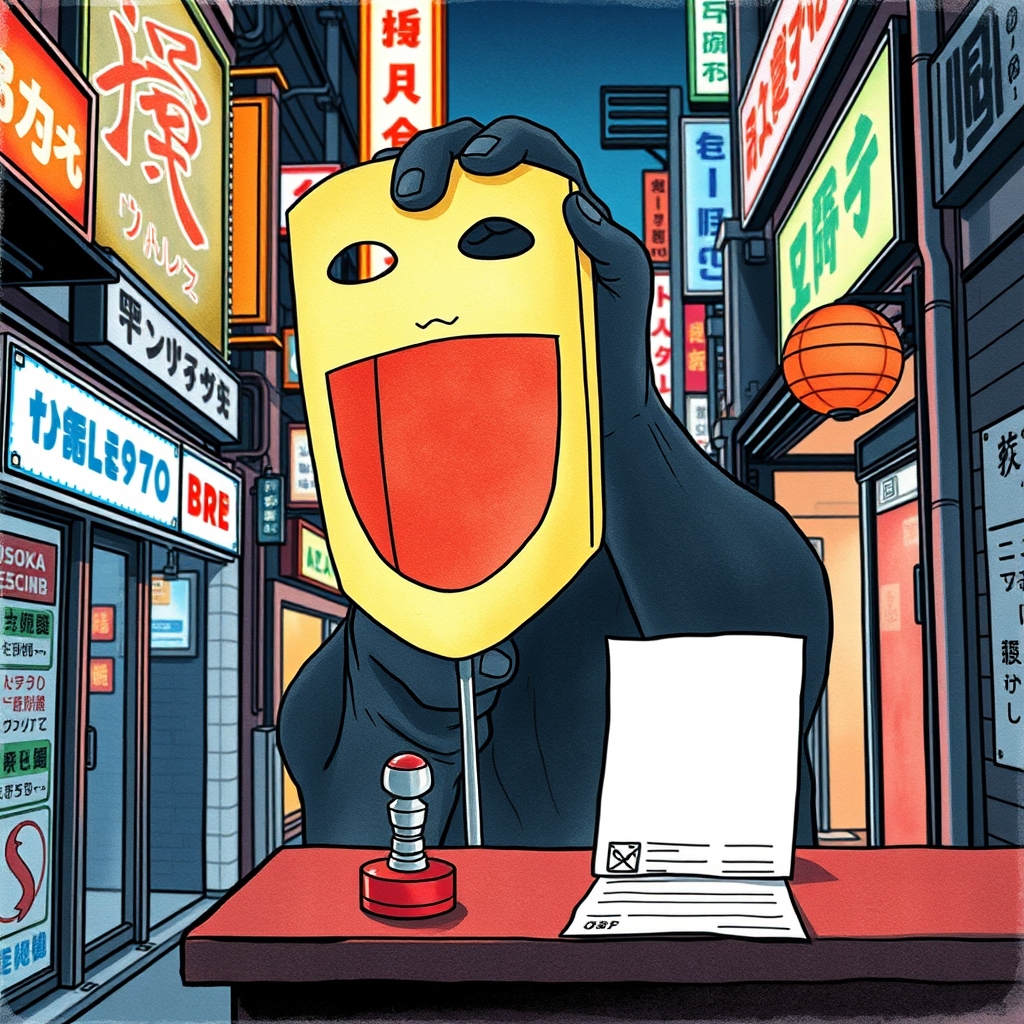
Osaka Prefectural Police announced on August 7, 2026, that they had arrested two more people in a case that began three weeks earlier on a street corner in Minami: the boss of an organized crime group affiliated with Japan's largest yakuza syndicate, and a 55-year-old unemployed woman whose name, investigators say, was on the business filing for a "free information center" she did not run.
Police identified the first suspect as Tokushige Ryusei, 34, head of the Tokushige-gumi and an executive of the second-generation Ken'ichi-kai, a group under the sixth-generation Yamaguchi-gumi — designated by authorities as an organized crime group under heightened conflict status. He also goes by Tokushige Negai. The second suspect, a 55-year-old woman, is not named here.
The charge is not touting. It is paperwork: violating the Osaka Prefectural Ordinance on the Regulation of Special Sex-Related Business Introduction Services (tokushu fūzoku assen jigyō no kisei ni kansuru jōrei), the local statute that governs the referral shops known in Japanese nightlife as muryō annaijo — free information centers.
According to police, the center in Osaka's Chuo Ward was registered under the woman's name, and in August 2025 the two allowed the business to be operated instead by Kasane Omori, 34, whom investigators describe as its de facto operator. Yomiuri Television reported that Tokushige had an acquaintance file the notification on his behalf beginning in 2024.
Police have not disclosed whether either suspect admits or denies the allegation. Neither has been convicted.
Why the Filing Is the Crime
The ordinance is the part of this case that is easy to skim past and shouldn't be.
Free information centers occupy a specific regulatory slot in Osaka. Anyone intending to run one must file a notification with the prefectural public safety commission through the local police station before opening. The filing is not a formality — it is the mechanism that attaches a named, checkable person to the storefront. And the ordinance disqualifies a defined list of people from being that person, including anyone who is a member of an organized crime group, or who has been one within the past five years.
That disqualification is the whole architecture. A gang boss cannot lawfully put his name on a free information center in Osaka. If police have the facts right, the response was not to abandon the business but to borrow a name — to satisfy the register with a 55-year-old woman while the operation ran through someone else.
Police say they are investigating whether the center's proceeds flowed to the crime group.
The Case It Grew Out Of
The arrests announced August 7 extend an investigation this site covered last month.
On July 15, 2026, Osaka police announced the arrests of Omori and a 24-year-old female employee of the same center — "Host Station Afro Banana" — on suspicion of violating the Osaka Prefectural Nuisance Prevention Ordinance (meiwaku bōshi jōrei), which bars street touting for host clubs, lounges and other venues offering settai, the regulated form of hospitality in which staff sit with and entertain customers.
The alleged conduct was narrow. In May 2026, police say, the two, acting with a man in his 20s, approached a woman on a street in Soemoncho, in Chuo Ward, and pitched her: "I want you to go see some hosts. We've got insanely handsome guys. Would it be OK if you just stopped by the info center first?" The woman was an undercover officer.
The structure police describe is the point. Direct street solicitation for a host club is illegal in Osaka. Solicitation for an information center sits in a different, softer category. So the alleged workaround inserted the center as a middle step: touts flag a woman down on the street, walk her into the center, and host-club staff collect her there. On paper, nobody sold a specific club on the sidewalk.
The Signed Pledge
MBS News reported a further detail on August 7 that had not previously surfaced, and it is the most telling thing in the case.
Omori, according to the report, had women who came through the center sign written pledges stating that they had used the information center and the host clubs of their own volition.
That is not a business record. It is a defense, drafted in advance, executed by the person the ordinance exists to protect, and filed before anyone was accused of anything. The touting ordinance turns on whether a woman was solicited. A signed statement that she came in on her own is an attempt to settle that question on the operator's terms before an investigator ever asks it.
Taken with the borrowed name on the business filing, the picture police describe is of an operation with two separate paper shields — one covering who owned the shop, the other covering how the customers arrived.
| Detail | As reported |
|---|---|
| Announced | August 7, 2026, by Osaka Prefectural Police |
| Suspects | Tokushige Ryusei, 34, boss of the Tokushige-gumi; a 55-year-old unemployed woman |
| Affiliation | Second-generation Ken'ichi-kai, under the sixth-generation Yamaguchi-gumi |
| Charge | Osaka ordinance regulating special sex-related business introduction services (name-lending) |
| Allegation | Center registered in the woman's name was operated by another person from August 2025 |
| Venue | Free information center, Chuo Ward, Osaka — "Host Station Afro Banana" |
| Earlier arrests | July 15, 2026 — de facto operator Kasane Omori, 34, and a 24-year-old employee |
| Earlier charge | Osaka Nuisance Prevention Ordinance (touting for a host club), May 2026, Soemoncho |
| New detail | Women allegedly made to sign pledges that they used the center and clubs voluntarily |
| Under investigation | Whether proceeds reached the crime group |
| Plea | Not disclosed by police |
What the Money Is For
Japan spent 2025 and 2026 rewriting the rules around host clubs, and the reason was never the clubs themselves. It was the debt.
The revised fūei-hō — the Businesses Affecting Public Morals Regulation Act, which licenses and polices host clubs, cabarets and adult-entertainment businesses — took aim at operators who run enormous bar tabs on customers and then lean on them to settle up through sex work. The same round of enforcement has produced arrests of scouts who place indebted women in brothels, and a ban on the "scout back" referral fees that made the placement profitable.
Street touting is the intake valve on that system. It is how a woman who was not going to a host club becomes a first-time customer, and a first-time customer becomes someone with a balance.
This site has covered the downstream end of that pipeline repeatedly this summer — scout groups convicted in Osaka, soaplands raided nationwide over their funding relationships with scouts, women arrested for street prostitution in Osaka's Kita district who told police they were covering a host's sales. The August 7 arrests are the first in this particular case to reach the other end of it, and what they allegedly found there was a designated crime group.
That is not a novel discovery about Japanese nightlife. Organized crime has taken a cut of the entertainment districts for as long as there have been entertainment districts, and the ordinance's disqualification clause exists precisely because lawmakers assumed the attempt would be made. What the case documents is the current shape of the attempt: not a gang running a club, but a gang standing behind a referral desk that exists to move women between two businesses it does not have to be named in.
What Comes Next
Two questions are open. The first is evidentiary and narrow: whether investigators can trace revenue from the center into the Tokushige-gumi, which is the difference between a registration offense and a proceeds case.
The second is structural. Osaka built a two-layer defense here — a touting ban on the street and a licensing regime for the referral shops — and the alleged scheme was designed against both of them at once, with a nominee for the license and a signed waiver for the solicitation. Nothing in the reporting suggests the arrangement was unusual or improvised. The ordinance worked in the sense that it eventually produced arrests. It did not prevent the business from operating for at least a year in the meantime.
This article is compiled from Japanese reporting on the Osaka Minami free information center case: MBS News and Yomiuri Television on the August 7, 2026 arrests of the Tokushige-gumi boss and a 55-year-old woman on suspicion of violating the Osaka Prefectural Ordinance on the Regulation of Special Sex-Related Business Introduction Services, on the suspected flow of proceeds to the crime group, and on the pledge forms; MBS News on the July 15, 2026 arrests of the center's de facto operator and a 24-year-old employee under the Osaka Prefectural Nuisance Prevention Ordinance and on the quoted street solicitation; and Japanese organized-crime trade press on the gang hierarchy. Suspects are named as Japanese outlets name them; the 55-year-old woman and the 24-year-old employee are not named here. The given name of the de facto operator is rendered "Kasane" in the August reporting and was given as "Rui" in earlier coverage; the kanji are the same and outlets differ on the reading. Police have not disclosed whether the August 7 suspects admit or deny the allegations, and no allegation in this case has been tested in court — an arrest is not a conviction. Legal glosses: fūei-hō = Businesses Affecting Public Morals Regulation Act, which licenses and regulates nightlife and adult-entertainment businesses; meiwaku bōshi jōrei = prefectural nuisance prevention ordinance, which in Osaka bars street touting for host clubs and other hospitality venues; tokushu fūzoku assen jigyō no kisei ni kansuru jōrei = the Osaka ordinance requiring notification for sex-industry and nightlife referral businesses and barring organized crime members from operating them; settai = the regulated hospitality, involving staff sitting with customers, that triggers licensing.