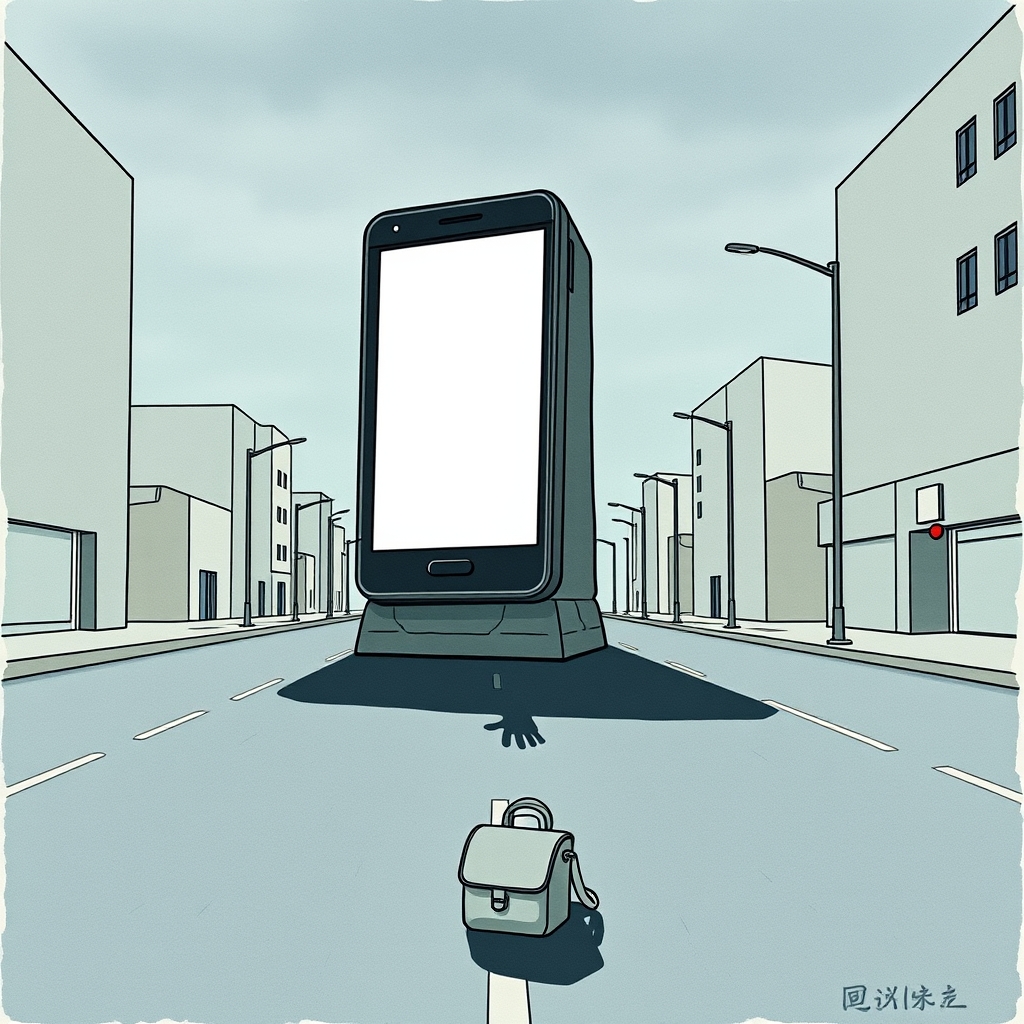
The Photograph
The alleged crime begins with a document, not a threat.
At a first meeting arranged through social media, according to Osaka prefectural police, the man asked the girl for identification and photographed it. Her name. Her age. Her school, on some accounts her home. Nothing about that moment is violent, and nothing about it is illegal on its face. It is the kind of thing a cautious adult might claim to be doing for safety.
What police say came next is a message: meet me again, or your parents and your school find out what you have been doing.
On July 30, 2026, the Osaka Prefectural Police re-arrested a 44-year-old unemployed man from Higashi-Osaka on suspicion of non-consensual sexual intercourse and of recording the act. Investigators at Sonezaki Police Station allege that he used that threat to compel a high school student to a hotel in Osaka Prefecture, assaulted her there, and filmed it on his smartphone. He was referred to prosecutors on July 31.
The man was already in custody. He had been arrested earlier this year over a separate case involving a different high school student, and has been indicted in that one. Police say the phone seized from him held sexual images and video of more than a dozen women, and they are working to establish how many of those encounters followed the same script.
The account is entirely the authorities'. The reporting reviewed for this article does not disclose whether the man has admitted or denied the allegation. Nothing here has been tested in court, and an arrest is not a conviction.
What Papakatsu Is, and Is Not
Papakatsu — literally "daddy activity" — is Japan's term for compensated dating: a younger woman meets an older man, and money changes hands. Sometimes it is dinner and conversation. Often it is not. The arrangements are struck on apps and social platforms rather than in licensed premises, and that is the essential fact about them.
Japan's regulated adult-entertainment trade operates under the Businesses Affecting Public Morals Regulation Act (fuei-hō), which licenses shops, vets operators, fixes locations and hours, and requires age verification of everyone who works there. A soapland or a delivery-health service is a business with a permit, an address and a public safety commission that can shut it down. Papakatsu has none of that. There is no operator, no license to revoke, no registry, no one who checks whether the person across the table is seventeen.
Where a minor is involved, the buyer's conduct falls under the Act on Punishment of Activities Relating to Child Prostitution and Child Pornography (jidō kaishun jidō poruno kinshi-hō), which criminalizes paying a person under 18 for sexual acts and criminalizes producing sexual images of them. Consent is not a defense; the transaction itself is the offense.
The point of comparison matters for understanding this case. A licensed shop is where the law can see. Papakatsu is where it cannot — and the man who knows that is the one holding the phone.
| Detail | As reported |
|---|---|
| Re-arrest | July 30, 2026, by Osaka Prefectural Police (Sonezaki Station) |
| Referred to prosecutors | July 31, 2026 |
| Suspect | Unemployed man, 44, of Higashi-Osaka; not named here |
| Suspicion | Non-consensual sexual intercourse; recording of the act |
| Alleged method | Photographed victim's ID at a paid-dating meeting, then threatened to inform her parents and school |
| Alleged venue | A hotel in Osaka Prefecture |
| Alleged date | August 2025 per Kyodo News, Jiji Press and the Mainichi Shimbun; two Kansai broadcasters place it in August 2024 |
| Prior case | Arrested earlier in 2026 over a separate high school student; already indicted |
| Evidence cited | Sexual images and video of more than a dozen women on his phone |
| Suspect's response | Not disclosed |
Wire services and broadcasters differ on when the charged assault occurred. Kyodo, Jiji and the Mainichi date it to August 2025; Kansai Television and Yomiuri Telecasting place it in August 2024. The divergence is stated here rather than resolved.
The statute cited for the filming also varies by outlet — some name the child pornography law's production offense, others the 2023 law penalizing the photographing of sexual images. Both were on the books at the relevant time; which count prosecutors ultimately pursue is not yet public.
The Leverage
Strip the case to its mechanism and it is not really about sex. It is about a threat that works.
The threat works because of what the girl believes will happen if the message is sent. Not prosecution — a minor in this situation is treated in Japanese law as a victim, not a defendant. What she stands to lose is everything else: her standing at school, her position at home, the version of herself her parents hold. Investigators say the man in this case allegedly went further than words, following at least one victim home and photographing where she lived, so that the threat had an address attached.
This is the structural feature that the current debate over Japan's sex laws keeps circling. Under the Anti-Prostitution Act (baishun bōshi-hō) of 1956, prostitution is declared impermissible, but the penalties fall on solicitation and on those who organize, broker and profit from it. The person who buys faces no criminal sanction under that statute. A Ministry of Justice study group has been examining since spring whether to change that, and this site covered its deliberations on July 20.
Whatever the merits of penalizing buyers, the asymmetry has a second-order effect that a case like this exposes. When the selling side carries the shame and the exposure risk and the buying side carries neither, silence becomes the seller's default and the buyer's asset. A blackmailer does not need the law to punish his victim. He only needs her to believe that being found out will cost her more than staying quiet costs her.
Police say the phone held more than a dozen women. If that number holds, it is a measure of how long the arithmetic worked.
What Police Did Right
The case reached investigators the ordinary way: someone reported it.
According to the reporting, a victim in the earlier case went to police, and that complaint opened the file that produced the phone, the images and this re-arrest. That is worth stating plainly, because the entire logic of the alleged scheme depended on no one doing it. Every additional count now under examination exists because one person decided the threatened exposure was survivable and the assault was not.
Osaka police are continuing to corroborate the other images. Whether those become charges depends on identifying the women, reaching them, and persuading them that coming forward carries less cost than the alternative — the same calculation, run again, with the state on the other side of it this time.
What Remains Open
Three things.
How many victims there are: police describe more than a dozen images, which is not the same as more than a dozen identified complainants, and the gap between those two numbers is where this case will be decided in size.
What he is ultimately charged with: the recording counts, in particular, sit at the seam between the child pornography statute and the 2023 sexual-imagery law, and the choice affects the sentencing exposure.
And whether the pattern is one man's. The method described here — meet through an app, collect identification, convert it into leverage — requires no organization, no premises and no capital. It is available to anyone willing to use it, in a market that by design keeps no records of who is in it.
This article is compiled from July 30–31, 2026 reporting by Kyodo News, Jiji Press, the Mainichi Shimbun, NHK, Kansai Television, Yomiuri Telecasting and ABC News on Osaka Prefectural Police's announcement. Where those outlets differ — notably on whether the charged assault occurred in August 2024 or August 2025, and on which statute covers the recording count — the divergence is stated rather than resolved. The suspect is not named here; the victims are minors and are not identified in any form. All allegations are as described by police; no charge has been tested in court, and arrest is not conviction. Legal glosses: fuei-hō = Businesses Affecting Public Morals Regulation Act, which licenses and regulates Japan's nightlife and adult-entertainment businesses; baishun bōshi-hō = Anti-Prostitution Act (1956), which declares prostitution impermissible but penalizes solicitation, brokerage and organized profit rather than purchase; jidō kaishun jidō poruno kinshi-hō = Act on Punishment of Activities Relating to Child Prostitution and Child Pornography; papakatsu = compensated dating arranged privately, outside any licensed premises.