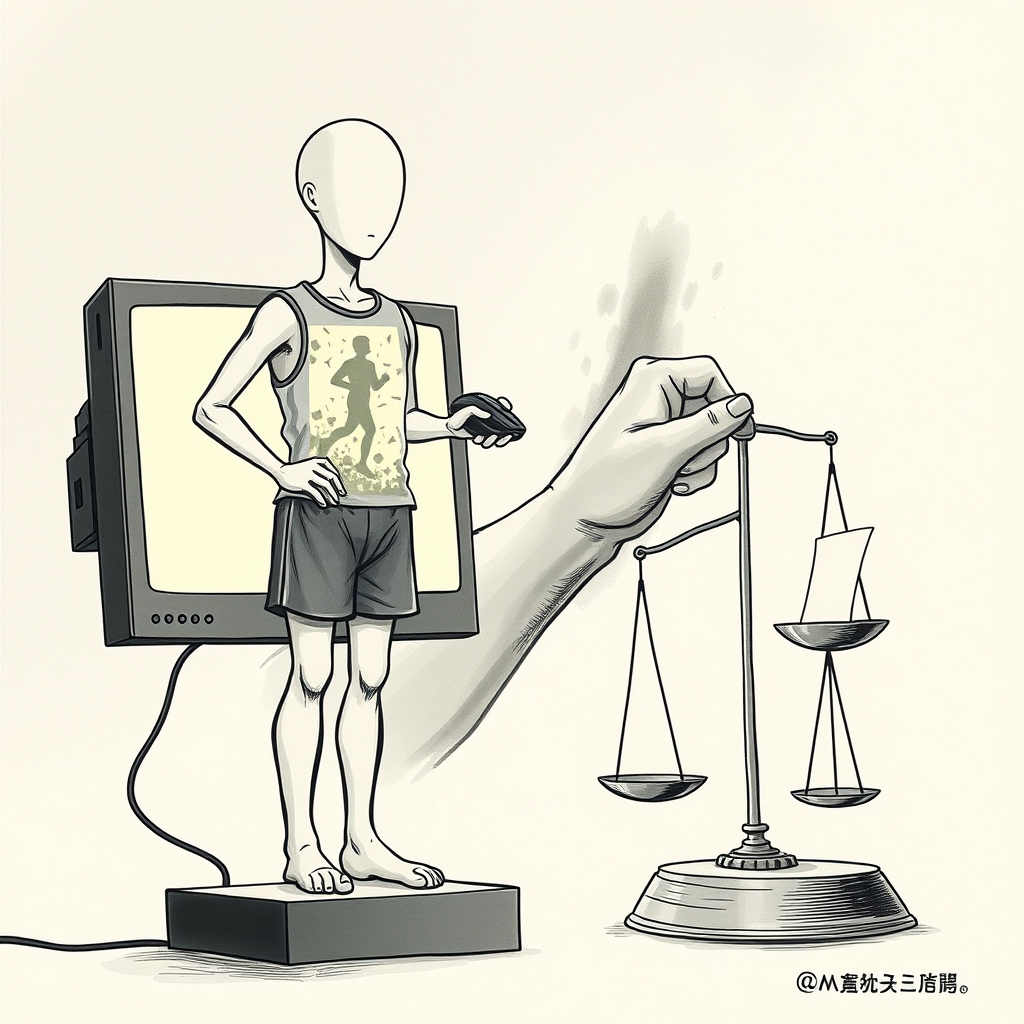
The Arrest
The detail investigators kept returning to was not the software. It was the clothing.
According to the account police gave reporters, the man told them he worked mostly from photographs of high school and university track athletes because a running uniform is easy for the model to remove — less fabric to reconstruct, a cleaner edge, a faster convincing result. In his telling, that was the selection criterion. Not who the women were. What they were wearing.
On August 3, 2026, the Metropolitan Police Department's juvenile division announced the arrest of a 32-year-old company employee from Himeji, in Hyogo Prefecture, on suspicion of violating the Act on Punishment of Activities Relating to Child Prostitution and Child Pornography (jidō kaishun jidō poruno kinshi-hō) — specifically its public-display offense — and of criminal defamation. Hyogo prefectural police worked the case alongside the Tokyo force.
The same day, police referred a 17-year-old third-year high school student from Tarumizu, in Kagoshima Prefecture, to prosecutors on the same suspicions. Investigators allege he was not a bystander to the operation but its customer: that he collected original photographs from the internet, posted them to a group, and asked the older man to alter them.
The charged conduct is dated to February 11, 2026. Police allege the two conspired to produce two fabricated sexual images — what the reporting calls seiteki deep fake, sexual deepfakes — from a photograph of a real woman now in her 40s, taken when she was a first-year junior high school student at a school sports day, wearing standard gym clothes. The images were then posted where others could see them.
The defamation counts concern three women in their 20s, whose high-school track-uniform photographs were allegedly processed the same way.
The man has admitted the allegations, according to the reporting. He is quoted telling investigators that he was glad when people were pleased with what he made, and that he did it because he wanted to see girls' naked bodies. None of this has been tested in court, and an arrest is not a conviction. This site does not name the individuals in the case, and the women are not identified in any form.
The Economics of a Request
What makes the case legible is that it had a price and a queue.
Police say the man subscribed to a paid generative-AI service at roughly ¥3,000 a month — about twenty dollars, the cost of a streaming bundle. With it, investigators say, he altered around 300 images of women and girls, and posted somewhere between 100 and 200 of them to a social-media group organized around images of female track athletes. Roughly half, police say, were made on request from the Kagoshima student.
A search of his smartphone turned up approximately 3,800 sexual images and videos. Police believe there are more victims than the four named in the current counts and are continuing to work through the material.
There is no studio here, no camera, no crew, no contract, no room. There is a subscription, a group chat, and a backlog of requests. The entire apparatus that Japanese law was built to regulate — premises, operators, licenses, the physical fact of a business — is simply absent, and the output is sexual images of identifiable real people who were never in the room because there was no room.
Why the Charges Look Strange
The two statutes in this case are doing work they were not designed for, and the seam between them is the story.
Japan has no criminal law against sexual deepfakes as such. There is no offense of fabricating a sexual image of a real person. What prosecutors have instead is a patchwork: defamation, obscenity provisions, copyright, and — in a narrow band of cases — the child pornography statute.
That statute is the reason the strongest count here exists. Japan's child pornography law reaches depictions of real children; purely fictional or wholly synthetic material falls outside it. In April 2025, a justice ministry official told the Diet that where a sexual deepfake can be traced to an actual child's photograph — a yearbook portrait, a school sports-day picture, an image lifted from social media — the law may apply. That is precisely the configuration in this case. The woman is in her 40s today. The photograph underneath the fabrication is of a 12- or 13-year-old, and she is a real, identifiable person. The image is therefore not treated as an invention but as a depiction of that child.
For the three women in their 20s, no such route exists. They were adults when the photographs were taken and adults when the images were made, and for adult victims Japanese law is close to empty. Creating, distributing or possessing a fabricated sexual image of an adult is, in the general case, extremely difficult to prosecute. What remains is defamation — a charge about reputational injury, brought under a provision of the Penal Code written in 1907, carrying a maximum of three years. It is being used here because it is what is available, not because it describes the harm.
The asymmetry is worth stating plainly. The same act, performed with the same software on two photographs from the same group chat, is a serious sexual offense if the underlying picture shows a schoolgirl and a reputation case if it shows a 22-year-old.
| Detail | As reported |
|---|---|
| Announced | August 3, 2026 |
| Agencies | Metropolitan Police Department (juvenile division); Hyogo Prefectural Police |
| Arrested | Company employee, 32, of Himeji, Hyogo Prefecture; not named here |
| Suspicion | Child pornography law (public display); criminal defamation |
| Referred to prosecutors | Third-year high school student, 17, of Tarumizu, Kagoshima Prefecture, on the same suspicions |
| Charged conduct | February 11, 2026 — two fabricated sexual images posted online |
| Child-pornography count | Based on a sports-day photograph of a woman now in her 40s, taken in her first year of junior high |
| Defamation counts | Three women in their 20s, from high-school track-uniform photographs |
| Images altered | Approximately 300 |
| Images posted | 100–200, to a group focused on female track athletes |
| Commissioned by the student | Roughly half |
| Seized from phone | Approximately 3,800 sexual images and videos |
| AI service | Paid subscription, about ¥3,000 per month |
| Suspect's response | Admits the allegations |
What This Has to Do With the Licensed Trade
Japan's adult-entertainment industry is, whatever else one thinks of it, a regulated one.
Businesses operate under the Businesses Affecting Public Morals Regulation Act (fūei-hō), which licenses premises, vets operators, fixes permitted locations and hours, and requires every worker's age to be verified. The Anti-Prostitution Act (baishun bōshi-hō) of 1956 declares prostitution impermissible and penalizes solicitation, brokerage and organized profit. Since 2022, performers in adult video have had a statutory framework governing consent, contracts and withdrawal. These regimes are incomplete and frequently criticized on this site and elsewhere. They do, however, share a premise: that sexual commerce involves a person who agreed to something, and that the law's job is to police the terms of that agreement.
Generative AI removes the person from the transaction while keeping her face. The women in this case gave no consent because no one asked them for any; there was nothing to consent to and no one to ask. They were not workers, not performers, not participants. They were photographs.
Every consent mechanism Japan has built for sexual imagery — age verification, contracts, cooling-off periods, the right to withdraw — attaches to a subject who is present. Here the subject is absent by design, and the entire regulatory architecture attaches to nothing.
What Remains Open
Three things.
The scale. Police describe roughly 3,800 files on one phone and believe the four identified women are not the whole of it. How many of those images can be traced to identifiable people, and how many of those people can be reached, will determine whether this stays a four-count case.
The student. A 17-year-old has been referred to prosecutors on the same suspicions as the adult who executed the requests, in a case where the alleged commissioning was itself most of the volume. How the family court and prosecutors treat a minor who ordered sexual images of other people's childhoods is not a settled question.
And the law. Reporting through 2025 and 2026 has tracked a rising volume of AI-generated sexual imagery reaching Japanese police, with minors on both sides of it, and repeated calls — including in the Diet — for legislation aimed at deepfakes rather than the current improvisation. A case in which prosecutors had to reach for a 1907 defamation provision to address three adult victims is a reasonably direct argument for that view.
This article is compiled from August 2–3, 2026 reporting by Kyodo News, Jiji Press, the Yomiuri Shimbun, the Asahi Shimbun, the Sankei Shimbun and TBS News Dig on the Metropolitan Police Department's announcement. Outlets differ slightly on the precise date the arrest was executed; the announcement and the referral of the high school student are dated August 3. The suspects are not named here, and the women whose images were used are not identified in any form. All allegations are as described by police; no charge has been tested in court, and arrest is not conviction. Legal glosses: jidō kaishun jidō poruno kinshi-hō = Act on Punishment of Activities Relating to Child Prostitution and Child Pornography, which reaches depictions of real, identifiable children; fūei-hō = Businesses Affecting Public Morals Regulation Act, which licenses and regulates Japan's nightlife and adult-entertainment businesses; baishun bōshi-hō = Anti-Prostitution Act (1956), which declares prostitution impermissible but penalizes solicitation, brokerage and organized profit rather than purchase; seiteki deep fake = sexual deepfake, a fabricated sexual image of a real person.