A Loophole Beside the One Japan Just Closed
For two years, Japan's authorities have hammered at a single pipeline: predatory host clubs that saddle young women with debt, then push them toward the sex trade to pay it off. A revised fuei-ho (Businesses Affecting Public Morals Regulation Act) took aim at exactly that in 2025, and enforcement this year has followed the money from host-club tabs to Kabukicho's sidewalks.
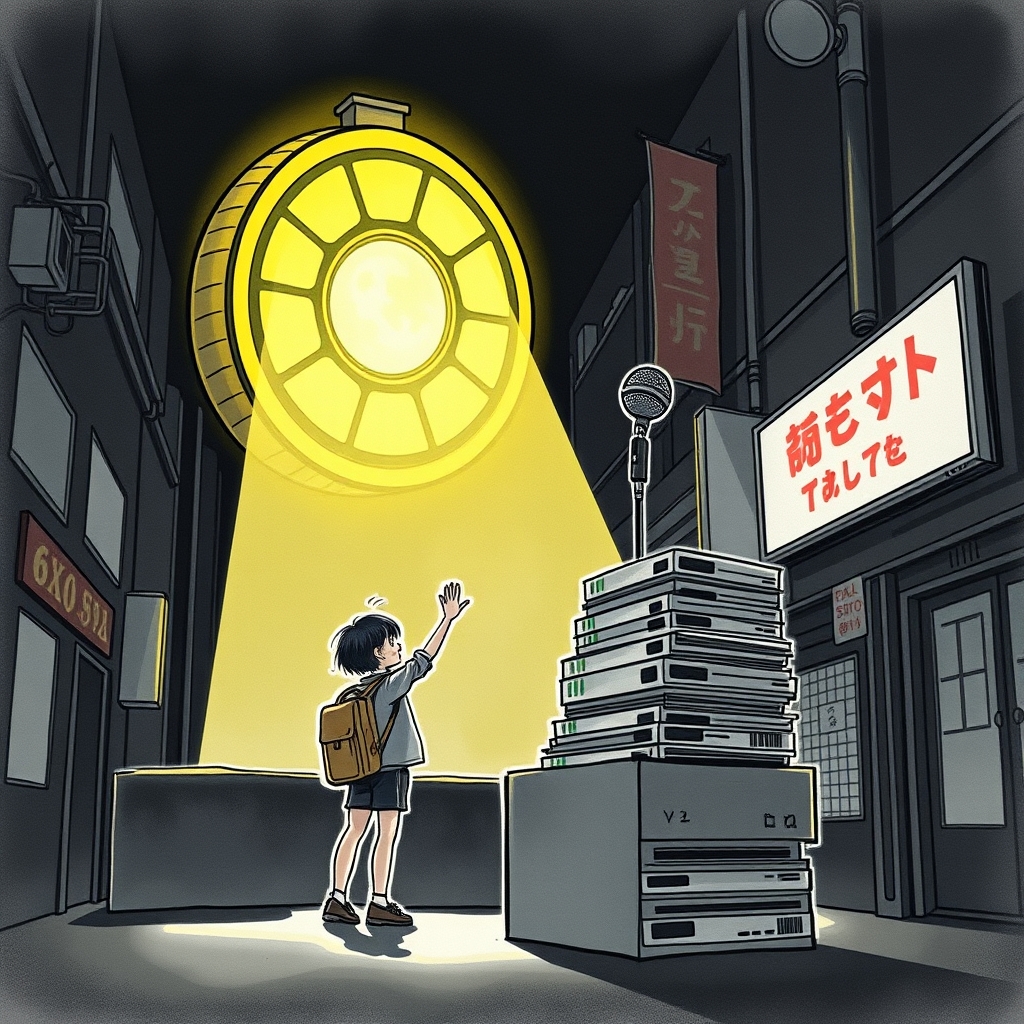
But a feature published July 15, 2026, by AERA Digital points to a second channel that the crackdown does not reach—and it involves children. The subjects are fans of menchika, "men's underground idols": young male performers who work small live houses without major-agency backing and sell proximity by the minute. Their most devoted patrons increasingly include middle- and high-school girls, and, the reporting finds, some of them are funding the habit through street prostitution and papakatsu (compensated dating).
The Economics of a Minute
The mechanics are precise, and punishing. According to AERA, admission runs on the cheki—an instant photo taken with the idol—priced at ¥1,000, which converts to a single loyalty point. The points buy access on a published tariff.
One point (¥1,000) buys a one-minute conversation. Thirty points (¥30,000) unlock a "key-lock" privilege—thirty minutes alone with the performer. Five hundred points (¥500,000) earn a purikura photo-booth session together; 1,500 points (¥1.5 million) buy a four-hour date at Tokyo Disneyland; and 3,000 points—¥3 million—buy a same-day round trip to Osaka and Universal Studios Japan with the idol.
The magazine centers on a 14-year-old junior-high student from Kanagawa Prefecture, drawn in over the previous winter after picking up flyers in Shinjuku's Kabukicho. In her case the spending stopped near ¥40,000 before the idol left his group. Others, the report states plainly, went far further—and, to raise the money, "there were girls who did street prostitution and papakatsu."
Why the Rules Don't Bite
The reason the menchika scene sits outside the host-club crackdown is structural, and a lawyer quoted by AERA names it directly: it is a loophole.
Host and hostess clubs are regulated establishments under the fuei-ho, which restricts their hours, locations and—critically—bars minors. Live houses are not classified the same way, and they admit minors. That leaves a venue where a child can legally stand in line, buy points and rack up five- and six-figure tabs to a performer, with none of the age controls that govern the club district a few blocks away. The point systems themselves, the Tokyo Metropolitan Police note, can demand more than ¥100,000 to unlock certain perks—sums no minor can produce from an allowance.
The scale of concern is not new to police. A Yahoo News investigative feature on the phenomenon reports that consultations to authorities over menchika roughly tripled between 2021 and 2022, with 16- and 17-year-olds the most conspicuous group, and cites cases of high-school girls working in illegal sex businesses who named idol spending as their motive.
The Number That Connects the Two Worlds
The clearest link between the fandom and the sidewalk comes from the enforcement data itself. When the Metropolitan Police's public-safety division tallied a stepped-up sweep around Okubo Park in Kabukicho—the epicenter of Japan's street-prostitution debate—it announced on December 4, 2024, that 88 women had been arrested on suspicion of soliciting between January and November 2024. Roughly 80 percent were in their 20s; the youngest was 16.
Asked why, 27 of them—about 31 percent, the single largest category—said they were earning money to spend on host clubs or men's underground idols. In the police ledger, in other words, the two obsessions already sit in the same line. What the host-club reforms addressed for one, the law has yet to address for the other.
These figures describe the reasons arrested women gave to police and the accounts collected by the outlets cited; no menchika performer or group is accused of a crime, and nothing here alleges that any idol solicited or directed prostitution.
Why It Matters Now
The timing sharpens the point. A Justice Ministry study panel convened in 2026 is reexamining the baishun boshi-ho (Anti-Prostitution Act)—including whether buyers, not only sellers, should be punished, and whether the law still fits an industry that has outgrown it. Much of that debate has framed the street-prostitution problem as a downstream symptom of host-club debt.
The menchika thread suggests the frame is too narrow. The same economic engine—manufactured intimacy sold on a points ladder, to customers with no ceiling on devotion and every incentive to keep climbing—operates in a venue the reforms never touched, marketed to buyers who are, by definition, too young to consent to what pays for it. Closing one door, this week's reporting warns, is not the same as closing the room.
This article is compiled from reporting by AERA Digital (July 15, 2026, via Yahoo! News Japan), a Yahoo! News investigative feature on men's underground idols, and figures announced by the Tokyo Metropolitan Police Department's public-safety division (December 4, 2024) as reported by Nikkei. Details of individual cases are attributed to those outlets as published. Legal glosses: fuei-ho = Businesses Affecting Public Morals Regulation Act, which regulates host and hostess clubs and bars minors from them; baishun boshi-ho = Anti-Prostitution Act. Terms: menchika (men's underground idols); cheki (instant photo taken with a performer); oshikatsu (fan-support spending); papakatsu (compensated dating). No individuals are accused of any crime beyond the arrests attributed to police.