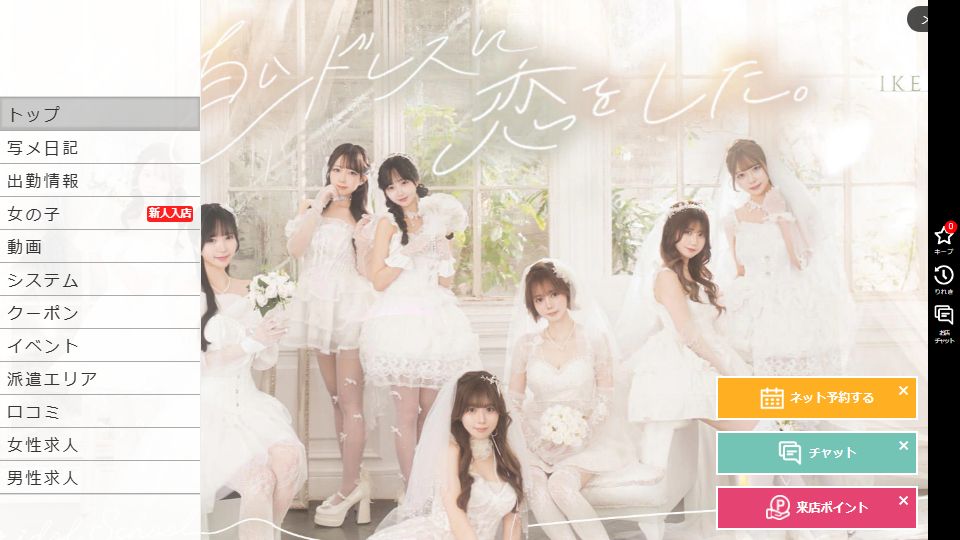
I have a soft spot for any business honest enough to name the emotion it's selling. E+ Idol School Ikebukuro — E+ aidoru sukūru, a delivery health working the north and west exits of Ikebukuro — sells one emotion above all others, and it prints it right on the marquee: kanarazu "oshi" ga mitsukerareru. You'll definitely find your oshi. The one you root for. In a city where Ikebukuro's Otome Road has spent two decades turning fandom into an industry, a deriheru that frames itself as an idol roster isn't a gimmick — it's reading the room.
The Pitch, and Why It's Smarter Than It Looks
Strip the school-idol packaging away and you've got a standard outcall service: you call, reception runs availability, a companion comes to your hotel or place. The dispatch net covers the full 23 wards and reaches into parts of Saitama, so the geography is wide. Cast runs young — the shop advertises eighteen to twenty-two — and there's an optional video-recording add-on for the guys who want a souvenir.
But the idol framing does real work. An idol fan doesn't buy a concert ticket; he buys a relationship with a specific girl he's decided to support. The entire economy of Japanese idol fandom — the handshake events, the photo cards, the merch — runs on oshi-katsu, the act of championing your chosen one. By naming itself a "school" with a roster you pick from, E+ is telling you up front: don't take whoever's free, find yours. That's not marketing fluff. That's a shop quietly instructing you to be a deliberate customer, and deliberate customers have better nights.
The Board: ¥15,000 to Start, and a 90-Minute Tell
Here's where I slow down and read the numbers, because the numbers are where a shop stops talking and starts telling the truth. Sixty minutes opens at ¥15,000. Ninety minutes runs ¥19,000 — and the shop flags that as a cut from ¥29,000.
Read that ladder carefully. The hour is your entry ticket — fair Ikebukuro money, nothing exotic. But look at the jump: an extra thirty minutes costs you only ¥4,000 over the hour, while the "list price" on that ninety supposedly sat at twenty-nine. The shop is doing the math for you and pointing at the answer: the hour gets you in the door, but the ninety is where the value lives. I take that the way I take a discount the team prints on a three-game pack — it's a nudge, and it's an honest one, because the per-minute rate genuinely improves. A shop that prices the longer course to actually reward you for booking it is a shop betting on your second visit, not your last.
Ten to Five: The Hours Are the Roster Talking
A 10 AM to 5 AM window is not a small claim. That's nineteen hours of coverage, daylight through last-train-and-beyond, and you don't hold a span that wide unless you've got the bench to fill it. Ikebukuro runs on a different clock than Kabukicho — more daytime traffic, more guys slipping out between obligations — and a shop open at ten in the morning is signaling it has cast on the schedule when the rest of the board is still dark. The idol "roster" metaphor only works if the roster is actually deep enough to let you find a favorite, and the hours are the first piece of evidence that it might be. You can't shop for an oshi among three girls. You can among many, across a day that long.
The Read
Here's what I'll stand behind. E+ Idol School Ikebukuro is a wide-net, young-cast Ikebukuro deliveryhealth that has chosen its theme with genuine local intelligence — in the neighborhood that invented oshi-katsu as an industry, naming yourself an idol roster isn't cosplay, it's positioning. The pricing is clean and self-explaining: ¥15,000 gets you in, and the ninety-minute course is built to reward the guy who reads the board instead of grabbing the cheapest slot. The hours are wide enough to back the promise of a roster you can actually choose from. The video option is there for who it's there for.
I won't quote the long-course experience I didn't book, and I won't pretend a slogan is a guarantee — every shop on the strip claims you'll find someone special. What I'll say is that the structure under this one's slogan is coherent: a deliberate-customer pitch, a price ladder that rewards deliberation, and the hours to make deliberation possible.
Verdict: An Honest Marquee
- Concept fit for Ikebukuro: ★★★★★ — "find your oshi" in the city of oshi-katsu is positioning, not gimmick.
- Price clarity: ★★★★☆ — ¥15,000 entry, a 90 that genuinely rewards the upgrade.
- Roster depth, as a claim: ★★★★☆ — the 19-hour window says the bench is there to choose from.
- First-timer friendliness: ★★★★☆ — easy door, easy to read, the theme tells you how to play it.
- Going back: ◎ — the board does its own selling; I'd test the ninety next.
I came to find out whether the slogan was the product or the product was behind the slogan. The honest answer is the most useful one: the marquee names a real emotion, and the pricing and the hours are built to let you actually chase it instead of just being sold it. In a genre that loves to oversell the fantasy, a shop that hands you a map and says find yours is doing something quietly respectable. Find your oshi, the sign says. The board, for once, actually lets you.