The Arrests
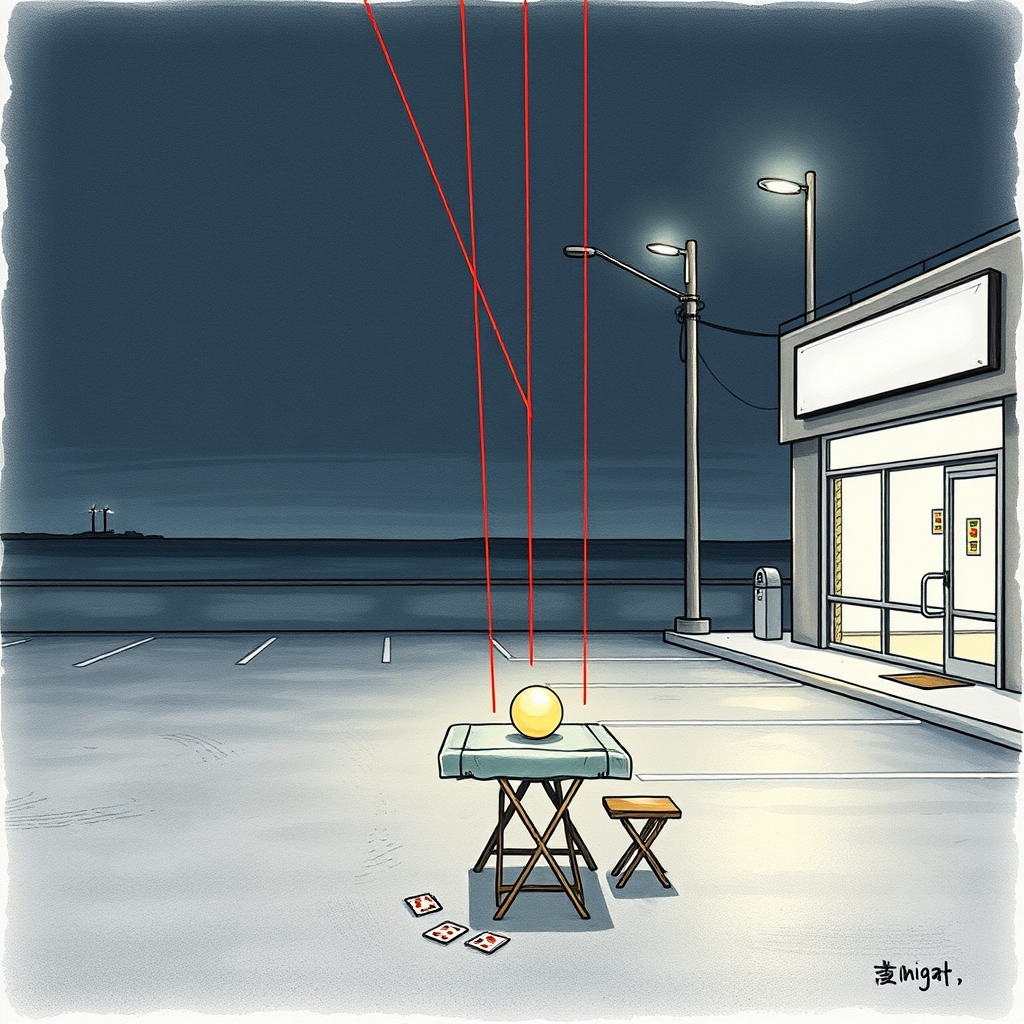
There was no storefront in this case. No licensed district, no bathhouse, no red awning for police to walk through. What Fukuoka prefectural police describe instead is a brokerage — advertisements written in code, a woman moved between prefectures, and handoffs in a convenience-store parking lot.
On July 28, the Nishinippon Shimbun, Kyushu's largest regional daily, reported that Fukuoka Prefectural Police had re-arrested two men on suspicion of violating the Anti-Prostitution Act (baishun boshi-ho) — on counts of contracting to have a person engage in prostitution, and of brokering. One is a 35-year-old company executive from the Katano district of Kokurakita Ward, in Kitakyushu.
A day earlier, on July 27, police arrested a third man: a 48-year-old who works as a fortune teller and whose address police listed as unknown. He was booked not under the prostitution statute but under the Employment Security Act (shokugyo antei-ho), on suspicion of referring a person to work harmful to public morals.
According to that report, the woman at the center of the case is in her 20s. Police allege she was made to enter a contract to engage in prostitution in Saga Prefecture in November 2025, and that in June 2026 she was introduced to a male customer in Okayama Prefecture — across the strait from Kyushu, on Japan's main island.
The fortune teller is alleged to have been the one who referred her to one of the other suspects. He has admitted the allegation, according to the report. Police did not disclose how the two re-arrested men have responded.
| Detail | As reported |
|---|---|
| Announced | July 28, 2026 (re-arrests); July 27 arrest of third man |
| Agency | Fukuoka Prefectural Police |
| People taken into custody | Three men |
| Charges (two men) | Anti-Prostitution Act — contracting for prostitution; brokering |
| Charge (third man) | Employment Security Act — referral to work harmful to public morals |
| Named suspect | 35-year-old company executive, Kokurakita Ward, Kitakyushu |
| Third suspect | 48-year-old fortune teller, address unknown; has admitted the allegation |
| Alleged contract | Saga Prefecture, November 2025 |
| Alleged introduction | Okayama Prefecture, June 2026 |
| Earlier arrests | July 8, 2026 — two Kitakyushu men |
| Suspected reach | Seven prefectures |
This site does not name the individuals in the case. None of the allegations has been proven in court.
How the Network Allegedly Worked
The July 28 arrests are the second round in a case that opened three weeks earlier.
On July 8, the Nishinippon Shimbun reported that Fukuoka police had arrested two men from Kitakyushu — a 35-year-old company executive and a 32-year-old man who described himself as a food-service worker, both from Kokurakita Ward — on suspicion of violating the Anti-Prostitution Act. Police suspected brokering across seven prefectures: Fukuoka, Saga, Nagasaki, Kumamoto, Oita, Miyazaki and Kagoshima — nearly the whole of Kyushu.
RKB Mainichi Broadcasting, reporting the same arrests independently, described the mechanics. According to RKB, the men posted coded phrases such as "adult encounters" (otona no deai) on dating sites and social media to draw buyers, then arranged introductions between a woman in her 20s and male customers. The broadcaster reported that two such meetings took place in April in a convenience-store parking lot in Nakama City, Fukuoka Prefecture, and that the fee ran roughly ¥12,000 to ¥20,000 per encounter. Investigators believe the operation had run for at least three years across Kyushu and the neighboring Chugoku region — a belief the Okayama introduction alleged in the newer arrests would appear to fit.
Why the Charges Matter
Japan's Anti-Prostitution Act, enacted in 1956, does not criminalize the sale of sex itself. It criminalizes the structure around it: solicitation, procurement, brokering, the provision of premises, the operation of a business, the supply of funds — and, in Article 10, the act of entering into a contract to have another person engage in prostitution. The contract count is the one police have leaned on repeatedly this year, in soapland cases in Niigata and in Kobe's Fukuhara district. It reaches the agreement itself, independent of whether any particular transaction can be proven.
Its ceiling, however, is low. The brokering and contracting offenses each carry up to three years' imprisonment.
The Employment Security Act count against the third man is the heavier instrument. Its provision on referring a person to work harmful to public morals carries imprisonment of one to 10 years — the same statute the Metropolitan Police used this month against the leadership of "Natural," the group described as Japan's largest adult-entertainment scouting organization. Police forces across the country have increasingly reached for it precisely because it punishes the act of channeling a person into the trade far more severely than the prostitution statute punishes the trade itself.
That a fortune teller allegedly occupied the referral role is not as incongruous as it sounds. Divination is a cash business built on repeat sessions with clients who arrive already disclosing money troubles, isolation and debt. It is a position of confidence, and confidence is the raw material of recruitment.
A Business With No Address
Japan's enforcement wave this year has been aimed largely at buildings — soaplands in Yoshiwara, Sendai, Niigata, Kobe and Wakayama; "men's esthetic" salons run out of apartment blocks in Chiba and Fukuoka. Those cases work because the premises are fixed. Police can watch a door, count the traffic, seize the ledgers, and, more recently, charge the landlord.
The Kitakyushu case describes something that offers none of that. The advertising lives on dating platforms and social media, in language chosen to be deniable. The meeting point is a parking lot. The alleged contract was signed in one prefecture, the customer supplied in another, and the recruiter carried no connection to any licensed business at all. When investigators say seven prefectures, they are not describing a chain of shops. They are describing an address book.
That is the direction the trade moves when the storefronts close, and it is the harder problem. A raid ends a soapland. A brokerage of this kind ends only when police can identify the people in it one at a time — which, three weeks and three arrests into this case, is what Fukuoka appears to be doing.
This article is compiled from a July 28, 2026 report by the Nishinippon Shimbun on the re-arrest of two men on Anti-Prostitution Act suspicion and the July 27 arrest of a third man on Employment Security Act suspicion; from the same newspaper's July 8, 2026 report on the initial arrest of two Kitakyushu men and the suspected seven-prefecture scope of the brokerage; and from RKB Mainichi Broadcasting's independent reporting on those initial arrests, including the coded online advertising, the meeting location in Nakama City and the per-encounter fees. All arrests described are at the stage of announcement by the investigating agency; the individuals are not named here and are presumed innocent unless and until convicted. Details of the suspects' responses to the allegations are given only where police disclosed them. Legal gloss: baishun boshi-ho = the Anti-Prostitution Act, the 1956 statute that penalizes solicitation, procurement, brokering, provision of premises, provision of funds and contracting for prostitution rather than the sale of sex itself; shokugyo antei-ho = the Employment Security Act, whose prohibition on referring workers to employment harmful to public morals is the principal charge used against scouting operations; fuei-ho = the Businesses Affecting Public Morals Regulation Act, the statute licensing and regulating Japan's hospitality and adult-entertainment businesses.