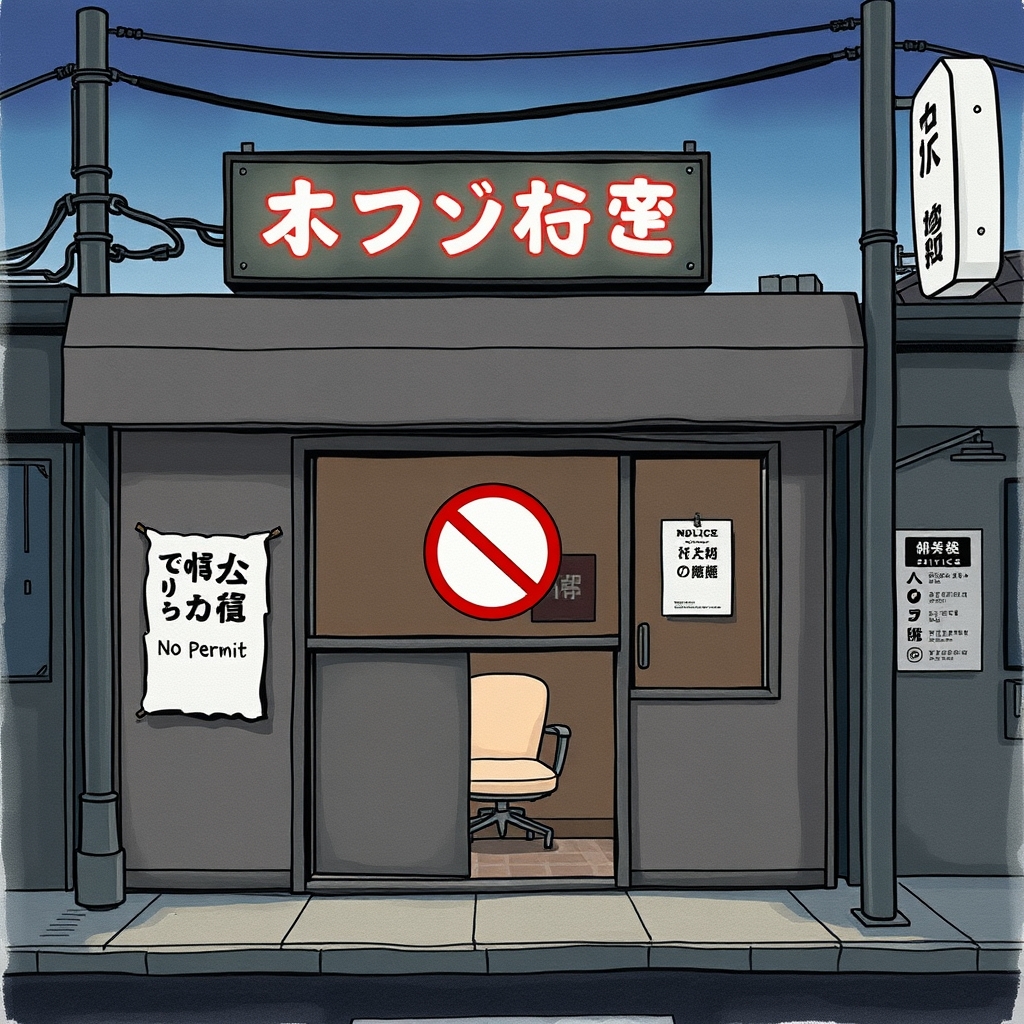
An Arrest in Tsu's Nightlife District
Police in Mie Prefecture have arrested the operator of a nightspot in the city of Tsu on suspicion of running it without the license the law requires, and say they are examining a tip that girls under 18 worked the floor.
The suspect, identified by Mie Prefectural Police as Ryutoku Ito, 37, was taken into custody on July 16, 2026, on suspicion of violating the fuei-ho (Businesses Affecting Public Morals Regulation Act), the statute that governs Japan's hostess bars, cabaret clubs and other "hospitality" nightlife. According to police, Ito operated a club called ROYCE in the Daimon district—the traditional entertainment quarter of Tsu, the prefectural capital—without ever obtaining the permit that such businesses must hold.
Local outlets described the venue variously as a lounge, a snack bar and a cabaret club. Under the fuei-ho, the label matters less than the activity: any establishment where staff sit beside customers to entertain them—pouring drinks, making conversation, playing games—is conducting settai (regulated hospitality service) and must be licensed to do so. Police say ROYCE was not.
What Investigators Say Happened
The charge as framed by investigators is narrow and specific. Between June 3 and July 10, 2026, police say, women employed at ROYCE sat with customers and entertained them—engaging them in games and similar service—while the business held no license to provide it. Ito has acknowledged the conduct, telling police, in the account carried by the reporting outlets, that he "kept operating without a permit while knowing it was illegal."
Investigators believe the club had been running far longer than the charged window suggests. According to the accounts, police think ROYCE began operating no later than November 2024 and estimate that it took in somewhere in the tens of millions of yen over its life.
The Reason Police Were Watching
What moved the case beyond a routine licensing matter was a tip. Police received information that girls under 18 had been serving customers at the club and drinking alcohol there—conduct that, if confirmed, layers child-welfare and youth-protection concerns on top of the licensing violation. That is why, the reporting notes, the investigation was handled not only by the prefectural police's community-safety side but by its juvenile division.
No charge relating to minors has been announced. Police describe that part of the case as under investigation, and the arrest itself rests on the unlicensed-operation allegation.
The facts above are attributed to Mie Prefectural Police as relayed by the news outlets cited; the question of whether minors were employed remains under investigation, and no finding on it has been announced.
Why a Local Case Fits a National Pattern
On its face this is a small, provincial matter—one club, one operator, a district most of Japan will never visit. But it sits squarely inside a fuei-ho enforcement posture that has hardened nationwide through 2025 and 2026.
The law's licensing regime exists precisely to keep the settai trade visible and accountable: to fix who runs a venue, where it may operate and, above all, to bar minors from working in it. An unlicensed club is one the state cannot see—no vetting of the operator, no zoning check, no age controls at the door. The tip that under-18 girls were on the ROYCE floor is exactly the failure the permit system is built to prevent, and it is the reason authorities treat "no license" as more than paperwork.
That logic has driven a run of enforcement this year across very different corners of the night trade—from soaplands and men's esthetic parlors operating outside the rules to concept cafés and hostess venues. The common thread is not the service on offer but the absence of a license, and the blind spot that absence creates. The arrest in Tsu is the same principle applied a long way from the neon of Kabukicho: where the paperwork is missing, the protections tend to be missing too.
This article is compiled from reporting by Chukyo TV News and Tokai TV (both via Yahoo! News Japan, July 16, 2026) and the Ise Shimbun (July 17, 2026). Details of the case, including dates, sales estimates and the suspect's statement, are attributed to those outlets as published, citing Mie Prefectural Police. Legal gloss: fuei-ho = Businesses Affecting Public Morals Regulation Act, which licenses and regulates hostess bars, cabaret clubs and other adult-entertainment "hospitality" businesses and bars minors from working in them. Term: settai (regulated hospitality service in which staff attend to customers). The suspect is accused of operating without a license; the allegation that minors were employed remains under police investigation and has not been established.